
Autonomy vs. concern
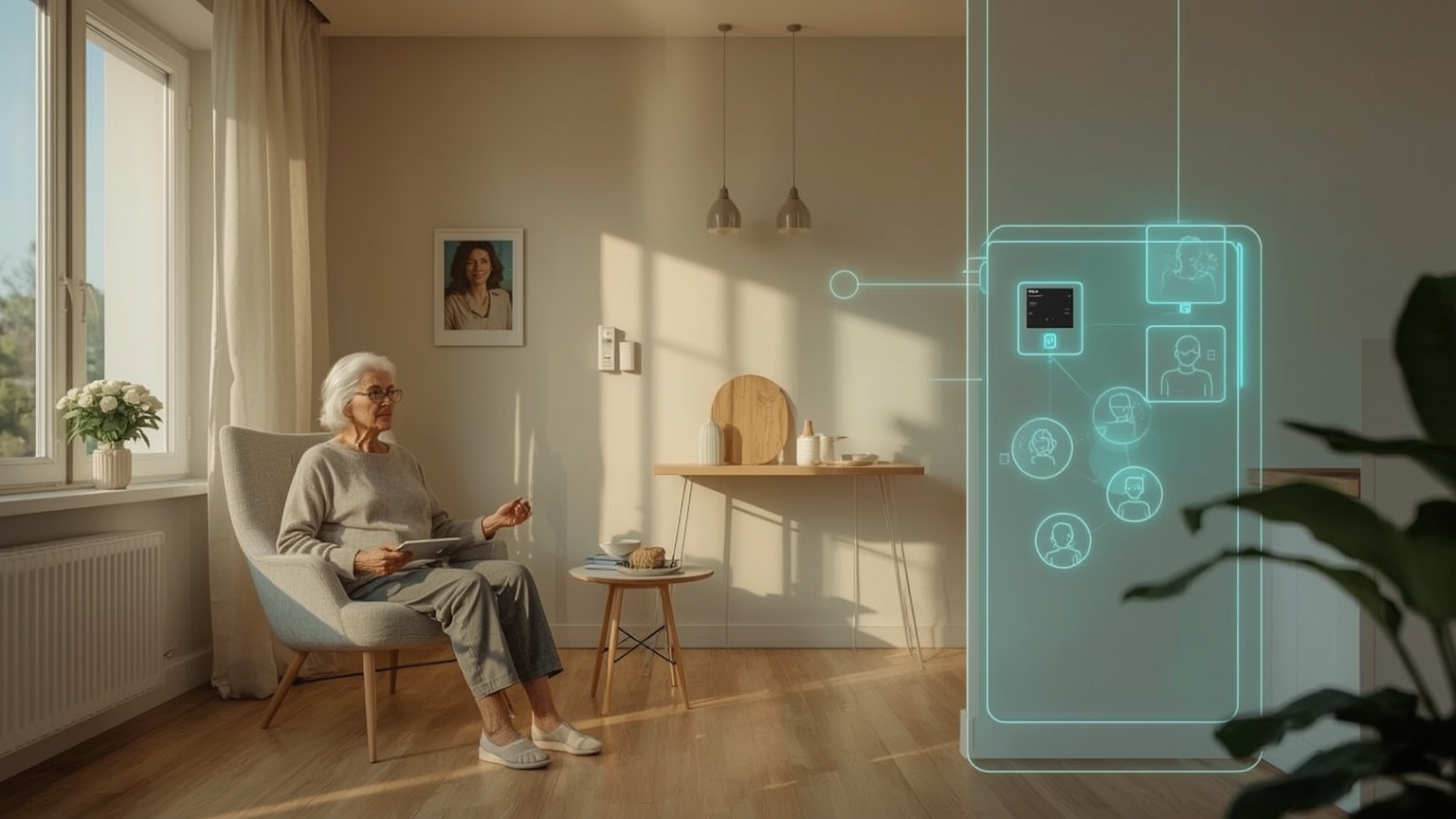
The person at home wants to remain independent. The family sees small breaks: calls, medication, meals, keys, routes, garden and the question of when help is truly needed.
24/7 on-demand availability / safer life at home

Remind. Organize. Support.
Available 24/7 on demand and tailored to the individual living situation of your loved ones: real-time support that helps daily life continue in a safer, familiar home.
The Problem
Many relatives want to help, but the people they care about have often managed everything on their own for decades. For the silent generation and post-war generation, support is often a question of dignity, not just organization. xx-care addresses this tension: preserve autonomy, strengthen connection and relieve relatives before friction turns into risk.
The person at home wants to remain independent. The family sees small breaks: calls, medication, meals, keys, routes, garden and the question of when help is truly needed.
People who lived through scarcity, rebuilding or strong self-reliance can experience support as control. The right product helps without shaming. Sometimes neutral helpers are easier to accept than close relatives, because personal sensitivities exist on both sides.
Residential care is expensive, not always immediately available and often too abrupt for people who can still live at home with measured support.
Stroke, heart attack, fall or illness can change the whole system overnight: for the person affected and for relatives who suddenly need to reorganize everything.
A resident living with dementia left a Stuttgart-West care home at an unknown time. The absence was noticed later; police, a helicopter and public photo search were involved. After tips, the man was found safe.
Source: Stuttgarter NachrichtenProblem -> Capability
The person does not want to be treated as if they can no longer do anything.
Capability: Reminder + consent toneSupport is framed as a calm invitation and next step, not as an order.
Every missed call can be harmless, or it can indicate real risk.
Capability: Risk detection + review queueSignals, unknown state and risk are sorted before people need to act.
Daily life functions with small support but breaks at friction points.
Capability: Routine Context + Local SensingLiving area, doors, presence, buttons, tags and daily patterns become context.
After a stroke, heart attack or fall, the home has to be learned again.
Capability: Transition Setup + Evidence GateNew routines, risks, roles and thresholds are built up in a controlled way.
Knowing and forgetting can blur. Familiar words and images matter more than new explanations.
Capability: Familiar Words and ImagesKnown terms, personal images and calm check-ins keep support familiar.
Small gaps are often noticed only when energy, orientation or safety has already dropped.
Capability: Meal, hydration and medication plausibilityThe system reminds calmly, checks patterns and recognizes when a person should look in.
Families need a responsible in-between option, not only either-or.
Capability: Human Handoff + Care CircleFamily, neighbors and care partners receive concrete tasks with clear boundaries.
Without clear facts, uncertainty quickly becomes overreaction, friction or a missed moment.
Capability: Escalation ladder + concise fact handoffThe review logic prepares the daily-life puzzle so people can decide faster and more appropriately.
When return windows, weather, door status and last-known zone are missing, the search radius grows every hour.
Capability: Exit-overdue + return windowxx-care interprets door, route and return signals and prepares a human-reviewed escalation with facts instead of assumptions.
Value must be felt and measured at critical points: less friction, better response, fewer false alarms.
Capability: Evidence ProtocolBaseline, KPIs, audit trail and safety/privacy gates show what actually helps.
Anonymized field patterns
No day is the same. xx-care therefore works with small, respectful interventions: observe, interpret, remind and only then involve people when the situation calls for it. This can relieve relatives without turning every act of support into a family conflict. Personalized words, familiar images and known voices can create trust when memory gaps blur the boundary between knowing and forgetting.
As little intervention as possible, as much support as necessary.
Weather, energy, illness, appointments and mood change the day.
Relatives stay connected without being turned into a permanent control room.
Known words, images and voices provide orientation when memory is incomplete.
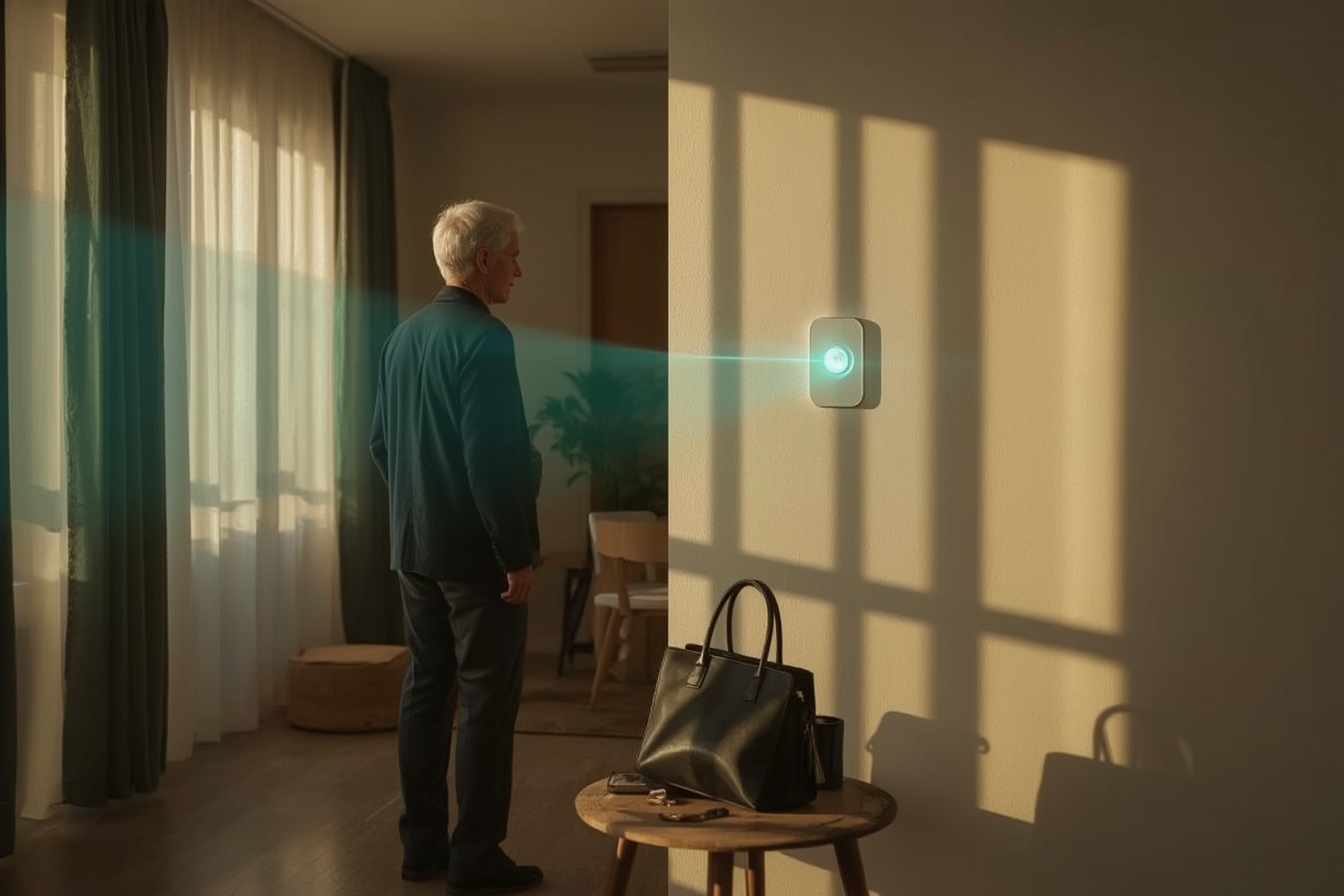
Familiar wording keeps the search calm. Known places and access context are checked quietly.
Tags, door events and repeated search patterns help without exposing the household to permanent camera monitoring.
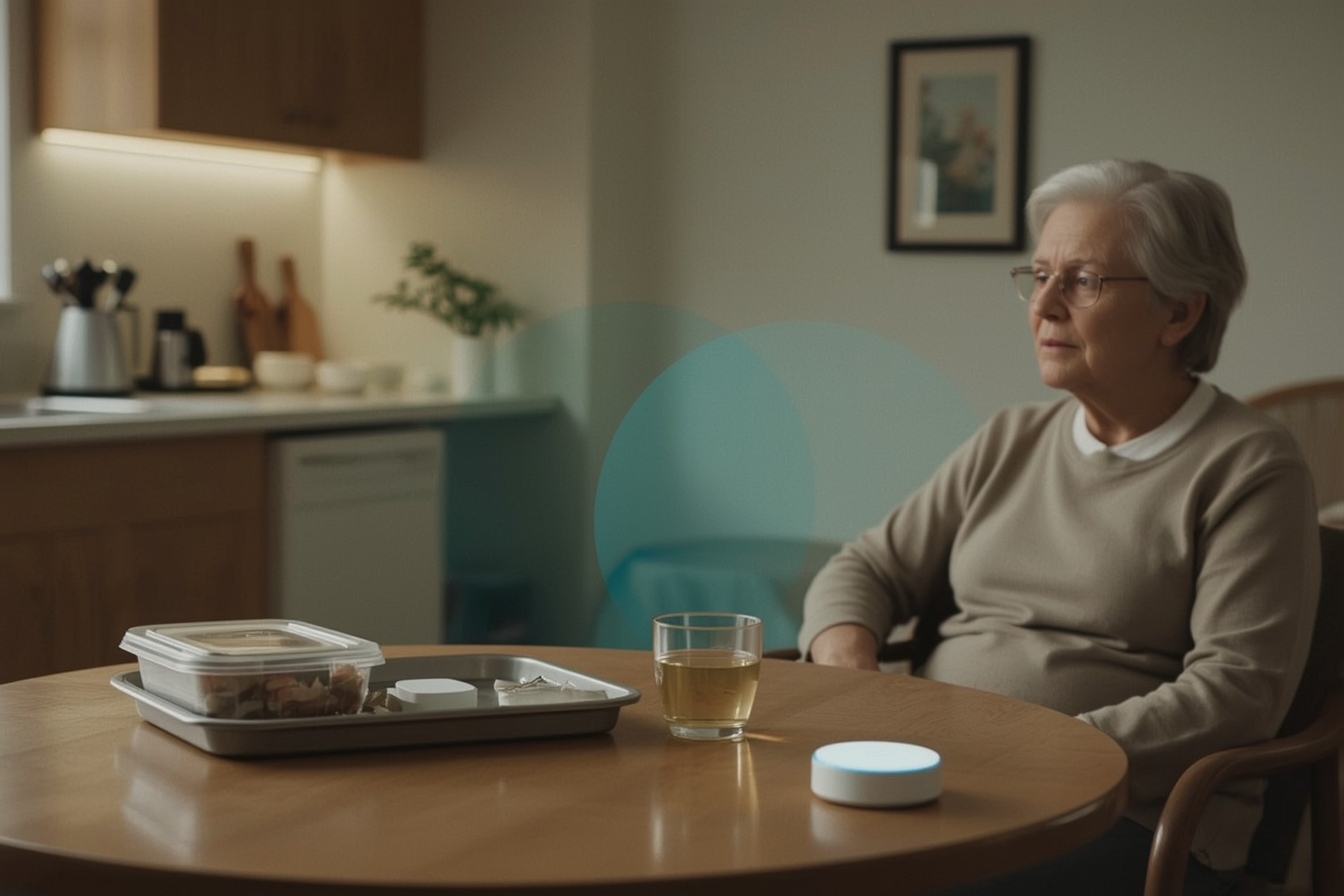
xx-care reads patterns, pauses and uncertainty without turning every signal into an alarm.
A calm prompt can remind; routine, unknown state and the need for a human check stay separated.
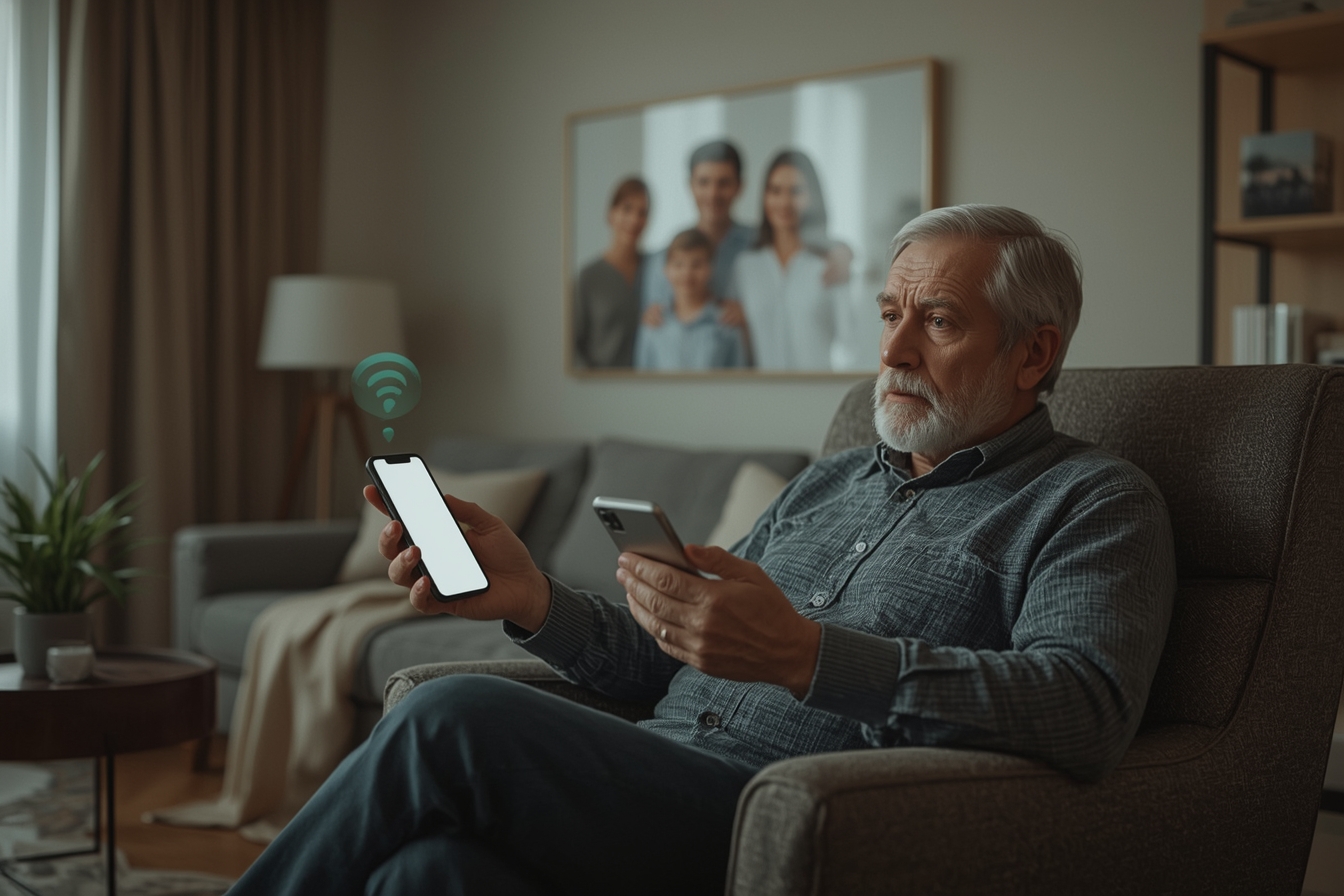
The wording stays familiar. The situation is sorted. People receive context.
Fragmented calls, missed responses or uncertain phrases are connected to daily context before people are involved.
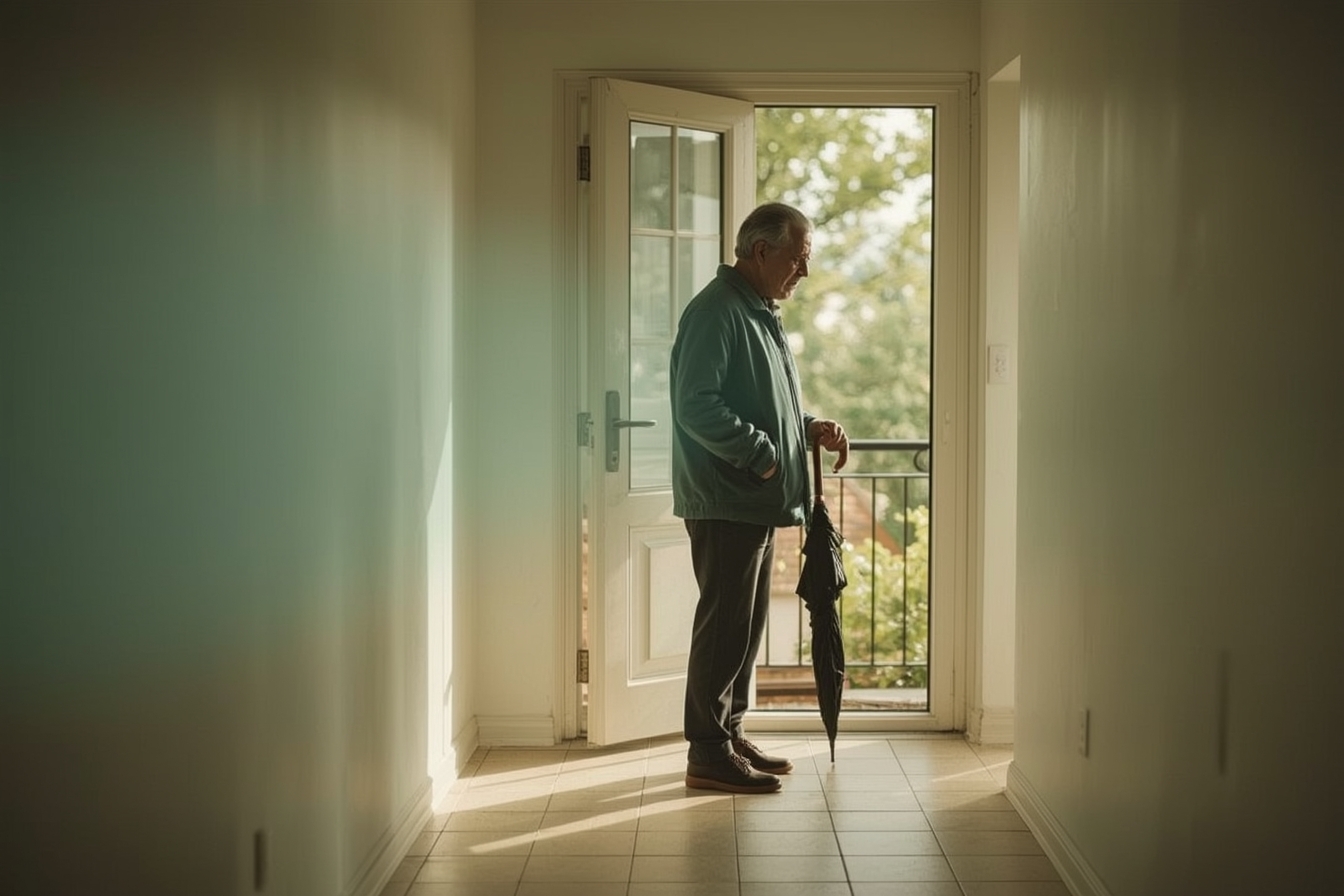
Jacket, garden, routes, energy and weather need flexible support.
xx-care adapts support to the flow of the day: no over-planning, only concrete prompts when situation, energy or risk require it.
Motion in daily life
The short scenes show the xx-care principle: daily life runs without interference. When uncertainty appears, familiar support becomes visible, helps briefly and fades back.


Support stays unnoticed. Only when the person moves toward the door, a calm light cue marks the key on its hook.
A gentle prompt is enough: drink first, then start. No control, no pressure, just the next step.
When memory and forgetting blur, familiar images, words and consent-based voices can support orientation.
Household signals become a clear picture. Relatives and helpers decide with context instead of uncertainty.
The Approach
Visible non-visual sensors and manual buttons provide only necessary events.
Rules evaluate time of day, routine, repetition, exceptions and known boundaries.
The familiar voice reminds calmly, asks back and helps at home with the next step.
Everyday signals are combined so potential danger situations become visible before people are involved.
Relatives, neighbors, care services or emergency services are involved only at clear thresholds.
24/7 on-demand availability
Described as a relaxed daily flow: real places, routines and events instead of an abstract AI cloud. Support adapts in real time to the needs and living situation of loved ones. Familiar wording works at home while background orchestration detects potential danger situations and keeps facts traceable for people.
Presence, light and first movement show that the day begins. A prompt appears only when it is actually useful.
Capability: daily patternA familiar voice reminds gently. Dispensing, removal and unknown state stay clearly separated.
Capability: reminder and reviewTags and known places help without embarrassing the person or triggering hectic alarms.
Capability: Object & AccessEating, drinking, rest and activity are read as soft context, not as control.
Capability: Local SensingDaily life remains free. Duration, weather, door status and expected return are reviewed only when needed.
Capability: risk contextIf there is no response, it does not become panic. A short check-in and factual sorting give people context.
Capability: Human HandoffDevice health, door status and calm night patterns close the day without permanent surveillance.
Capability: Evidence Gate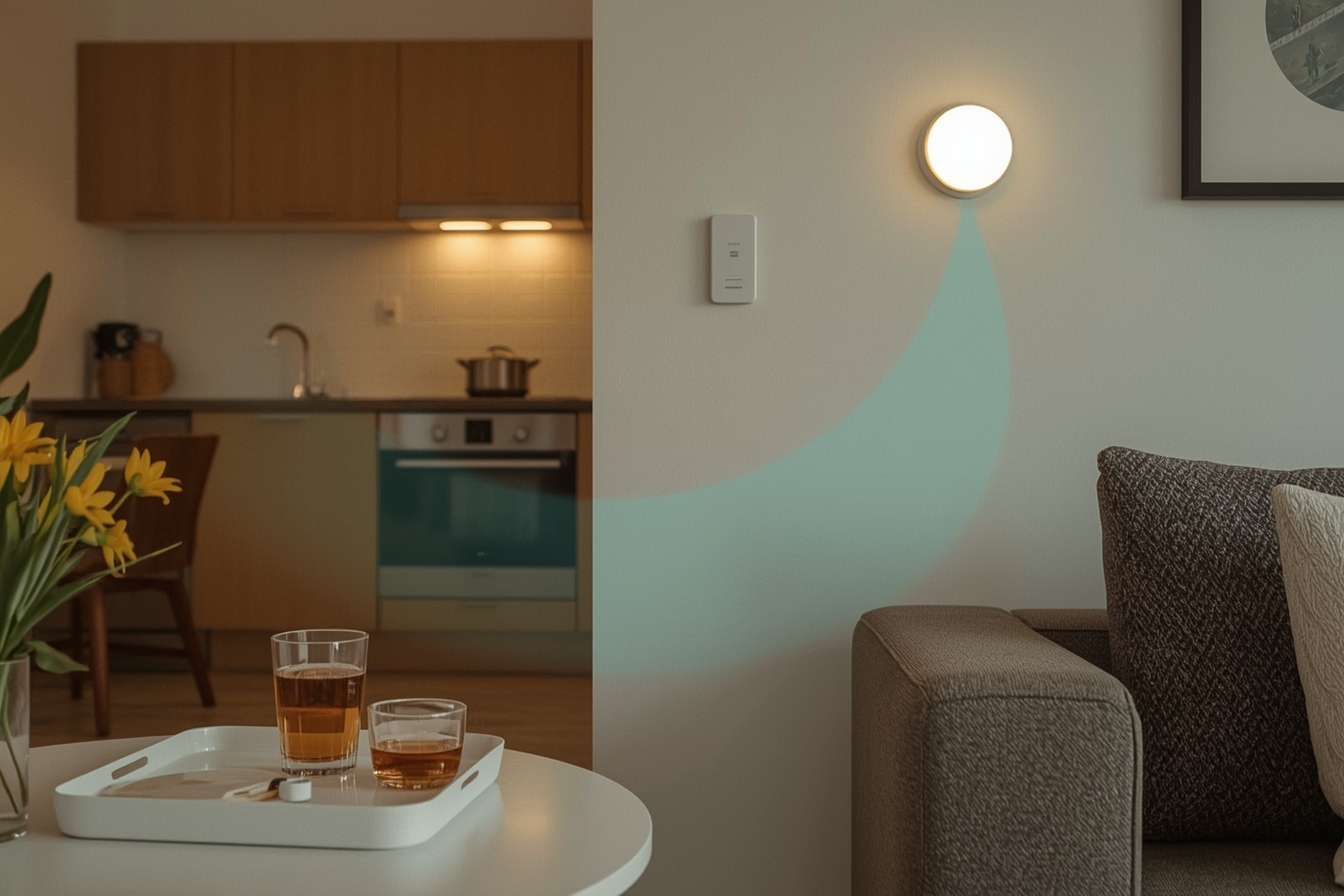

Characters and operation
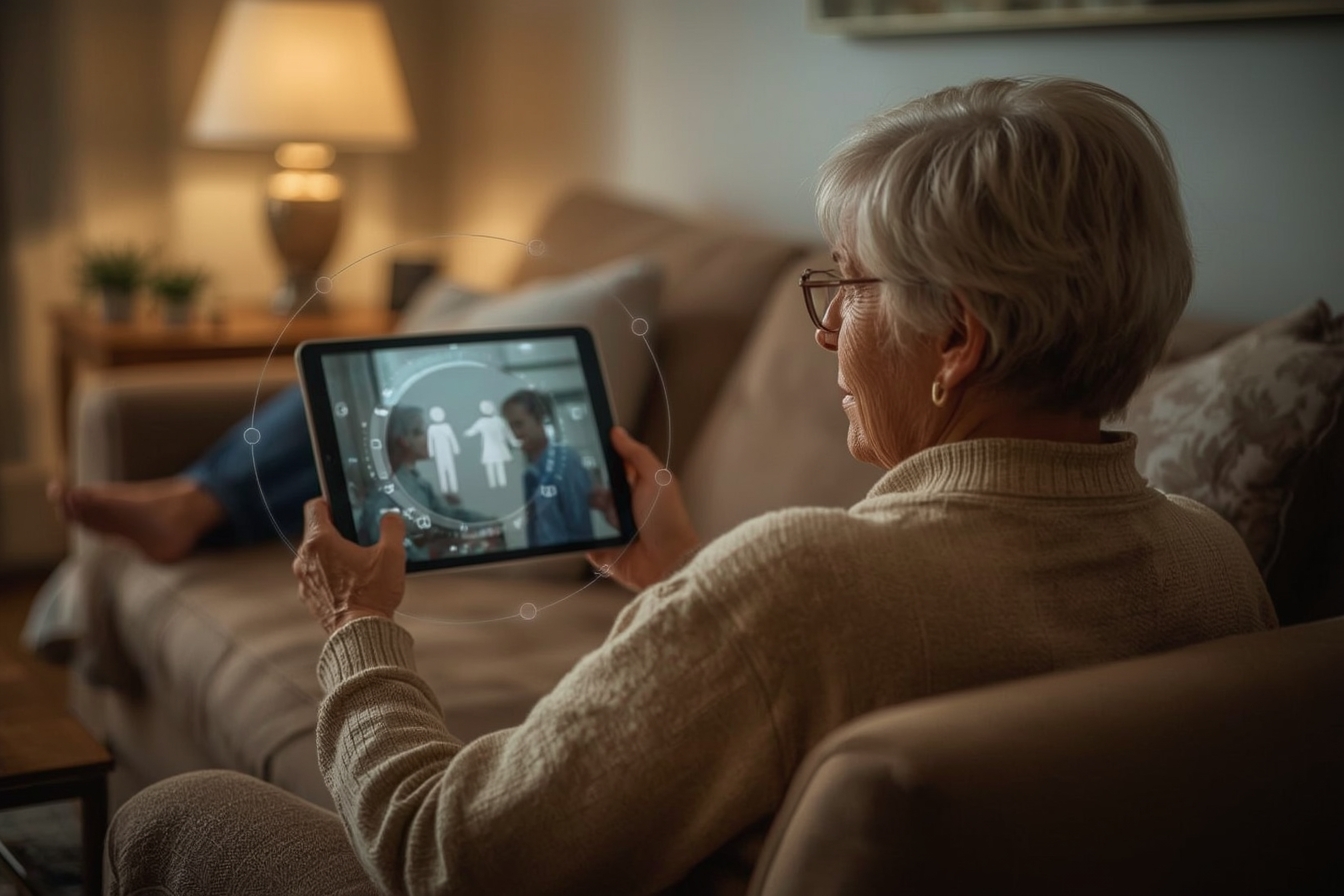
In contact with the person at home, there is deliberately only one familiar face and one voice: a standard character or a family image with a consent-based voice. The functional context layer is not a second person, but the background logic that prepares signals, rules and evidence.
xx-care is not staged as a show. The operating layer waits locally for patterns, limits and deviations. When nothing needs attention, support stays in the background and the person at home keeps their own rhythm.
A short line on a display, a calm check-in or a reminder can be enough. The support is measured: punctual, respectful and only to the degree required.
With consent, known phrases, photos and bounded voice snippets can support orientation. That builds trust when memory gaps make knowing and forgetting blur for a moment.
Signals, exceptions and open questions are combined. Relatives, neighbors or care partners receive clarity and transparent facts before deciding whether support is needed.
LEA is a prepared standard character for direct contact at home: friendly, calm, with measured humor if desired and clear wording for reminders, check-ins and next steps.
LEO is a second selectable standard appearance with its own voice and tone. The function remains the same: remind clearly, ask calmly and appear only where support is actually needed.
With consent, families can store approved images, familiar names, short voice snippets and personal wording. This premium trust layer is meant for cases where familiar presence creates more acceptance than a standard character.
Concrete use cases
Reminder, confirmation, unknown state and human review instead of assuming intake.
KPIs: reminder success, response latency, missed-dose follow-up.Meal, drinking and delivery events become context, not proof of consumption.
KPIs: absent-routine flags, review time, false positives.Keys, bag, health card, mailbox and lockout are supported through tags and routines.
KPIs: object search time, failed searches, access incidents.Silence, panic or missing response triggers triage, not automatic emergency calls.
KPIs: triage duration, escalation quality, false alarm rate.Activity remains possible, with weather, door, duration and return checks.
KPIs: safe return, overstay review, caregiver interruption.After stroke, heart attack or fall, routines, routes and support boundaries are re-established.
KPIs: transition completion, routine recovery, avoidable escalation.A prioritized queue shows attention, unknown state, device gaps and concrete tasks.
KPIs: avoided drives, stress rating, tasks closed.Approved images, voices, names and phrases help when new explanations no longer land reliably.
KPIs: acceptance, drop-off rate, successful orientation.Buttons, tags, door status, light cues and device health form a simple local support network.
KPIs: signal coverage, device health, clear handoffs.Evidence & benefits
xx-care is designed for significant cultural and societal change: more people reach an age where targeted support becomes necessary, while families, neighborhoods and care services need new ways to coordinate. Its value shows up in daily life: less alarm noise, faster useful response, better acceptance and auditable traces where safety depends on them.

The German Alzheimer Society reported around 1.84 million people with dementia in Germany for 2024.
The 2050 scenario corridor sits clearly above the latest German estimate.
Alzheimer Europe projects roughly 19.9 million people with dementia in wider Europe by 2050.
Alzheimer's Association figures point from 7.4 million people aged 65+ in 2026 to nearly 13 million by 2050.
Alzheimer's Disease International projects nearly 71 million people with dementia in Asia-Pacific by 2050.
Destatis reported for 2023 that 86 percent of people needing care were supported at home.
UCL found significant harm in 9.4 percent of dementia-related missing incidents in UK police data.
A resident living with dementia was found after an unknown exit, helicopter search and public photo appeal.
A public Stuttgart care campaign at Feuerbacher Bahnhof shows: AI does not replace care; it must support human care.
vdek reported the average personal contribution in the first nursing-home year in Germany for January 2026.
vdek Baden-Württemberg reported the average personal contribution in the first nursing-home year for January 2026.
Local April 2026 price checks for care grade 3 show monthly residential care can reach this order of magnitude.
The German social-assistance protected cash reserve generally protects EUR 10,000 per adult, not full household wealth.
For German care assistance, recourse to adult children generally starts above EUR 100,000 annual gross income per person.
Google Analytics is loaded after consent and tracks domain, language, section views, scroll depth and CTA intent.
Sources: WHO Dementia Fact Sheet, German Alzheimer Society 2024, Alzheimer Europe 2025 prevalence report, Alzheimer's Association Facts & Figures 2026, Alzheimer's Disease International Asia-Pacific report, German Federal Ministry of Health Dementia Strategy, Destatis care statistics 2023, Destatis living alone 2024, vdek nursing-home contributions January 2026, vdek Baden-Württemberg 2026, local Stuttgart price check 04/2026 for care grade 3, German Federal Ministry of Health residential care, German Federal Ministry of Labour and Social Affairs relatives relief act, German regulation on § 90 SGB XII, Stuttgarter Nachrichten missing-person search Stuttgart-West 2026, UCL missing incidents dementia 2026, WFSB Windsor Locks 2026, WALB Valdosta 2026, NSW Police/Mirage News Strathfield 2026. Live photo Stuttgart-Feuerbach 13 May 2026: public care campaign by the City of Stuttgart (stuttgart.de/pflege), anonymized web version with the xx-care interpretation shown separately; no partnership or endorsement claim.
SEO & search context
xx-care positions itself between Healthcare AI, artificial intelligence, dementia support, care at home and the real question of whether a care home is already necessary.
xx-care is the official Digital Market Services product brand for a local-first Care Operating Layer at home.
People searching for xx care without the hyphen, XX Care or xxcare are looking for the same official brand.
The international English homepage is xx-care.com; the German canonical homepage is xx-care.de.
Yes. The official spelling is xx-care. Search variants such as xx care, XX Care and xxcare refer to the same brand.
A local-first support system for safe routines at home: familiar prompts help with the next step, background context organizes signals and people decide in critical escalation.
xx-care can support orientation, routines, meals, object and access search and care handoffs. It does not diagnose and does not replace care.
Not in every case. xx-care addresses the in-between state: home still works, but not completely alone, and relatives need reliable relief.
AI helps with context, triage and prioritization. The approach stays data-minimized, local-first and human-controlled.
Unclear situations are sorted before they become family stress. Relatives receive context instead of constant check-ins, drives and guesswork.
Familiar words, personal images and known voices can support orientation when knowing and forgetting blur during the day.
Routines, routes, support boundaries and family roles can be rebuilt so life at home can regain structure and independence.
The product is local-first, data-minimized and avoids hidden permanent surveillance. People remain responsible for critical decisions.
Investor Relations
xx-care should not present itself as a market leader yet. It does not have the installed base, revenue, clinical validation or regulatory maturity for that claim. Its stronger position is different: xx-care acts as a local care-orchestration layer for people living alone with cognitive decline, combining sensor input, LEA voice, telephony/callback, the care circle, privacy and safety gates, and evidence measurement into a measurable operating loop.
Investor Thesis
The care crisis will not be solved by adding more buttons, cameras or isolated apps. xx-care turns weak daily-life signals into prioritised, dignified and measurable care actions. That is the product logic: not more alarms, but better interpretation, less noise and a clearer record of what actually helped.
Documented pressure
Telecare & emergency response
These providers are strong in emergency call centres, pendants, fall sensors and service operations. xx-care does not replace that layer. It adds proactive daily-life logic before the emergency: meals, medication, key or bag panic, hygiene, weather/clothing, callback replay and documented caregiver tasks.
AI care operations
These systems are often built around B2B care-agency operations. xx-care starts with the private dementia household and builds local, privacy-conscious orchestration for the apartment, the family and the care circle.
Fall detection & sensing
These products address important fall-risk problems. xx-care treats falls as one signal type within a wider daily-life problem: not eating, using the wrong chemicals, skipping medication, being unable to express a need, losing keys or overloading neighbours.
Companion & voice products
These products validate reminders and social prompting. xx-care is not companion-first. LEA only speaks inside a safety and evidence framework: short clear sentences, no shaming, no memory tests and no synthetic family-voice imitation.
01
The number of affected households is growing while care remains home-based, more older people live alone and relatives cannot be onsite all the time. This pressure is structural, not episodic.
02
xx-care combines sensing, voice, telephony, role logic, privacy gates and evidence into a local operating loop. It does not stop at “a sensor fired”; it asks what the event means in a dementia journey, who should act and what should intentionally remain quiet.
03
xx-care can generate proof with a disciplined pilot path: fewer unnecessary check-ins, clearer prioritisation, traceable handovers and modular upsell logic. The model is not a rigid package but a flexible orchestration layer that can be upgraded and reduced as household needs change.
04
German care economics
The financial burden is real: according to vdek, the national average personal contribution in the first year of a care home was 3,245 EUR per month at the start of 2026, with higher burdens in some regions. Once assets fall below protected social-assistance thresholds, affected people generally retain only a protected reserve of around 10,000 EUR plus small add-ons for dependent household members. At the same time, relatives can be drawn into support obligations above an annual gross income of 100,000 EUR. This is why a dignified, modular and home-based alternative matters economically as well as socially.
We are looking for partners for the next disciplined step: pilot households, municipal or care-adjacent test environments, privacy and safety review, technical infrastructure, grant funding and investors who understand local, privacy-preserving care orchestration as an operational layer rather than a gadget story.
Digital Market Services